HGS BHIMTAL
Day-Cum-Boarding School


Pedagogical Approach
HGS
HGS Bhimtal, Nainital, Uttarakhand, India- 263136
principal.bhimtal@hgedu.org
05942-247073
Pedagogical Approach
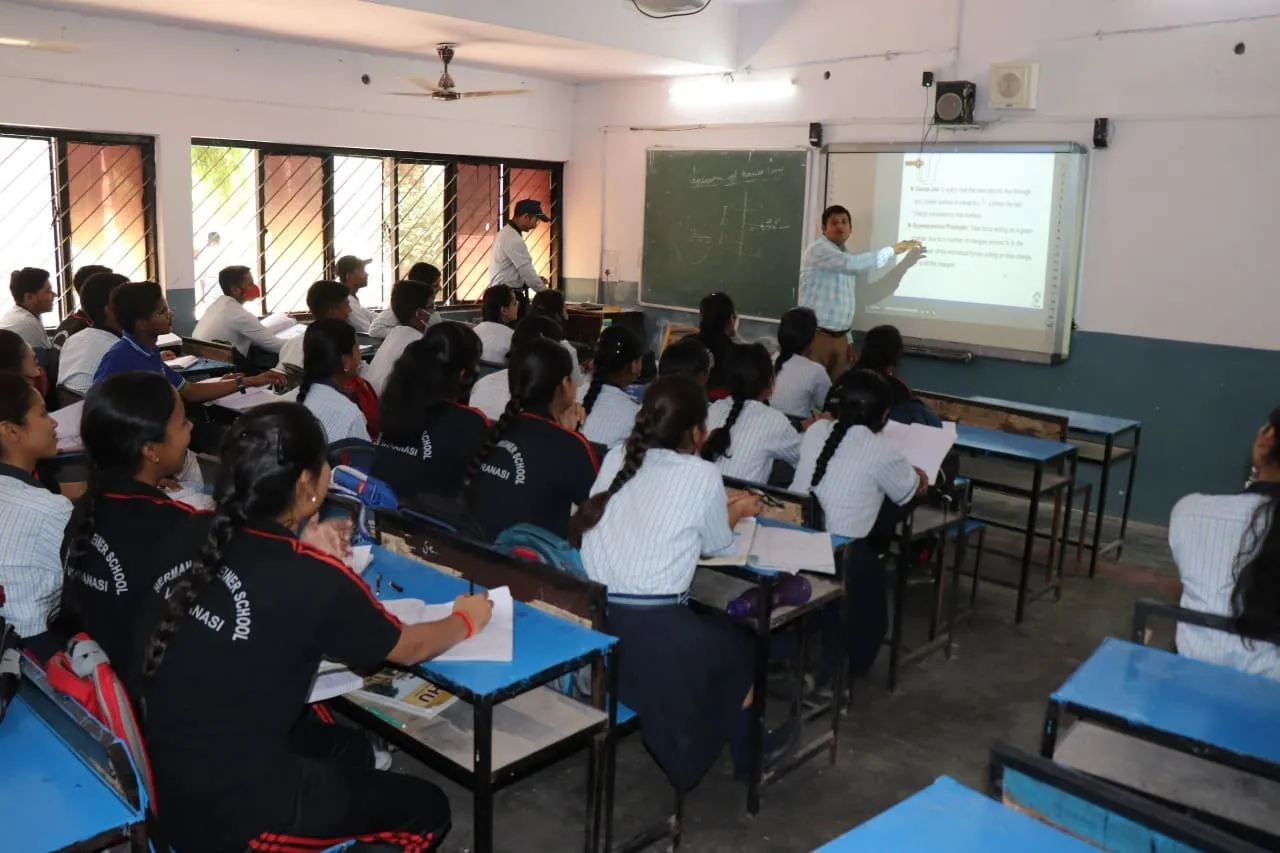
At HGS a variety of teaching-learning methodologies, integrated with technology, are used to give students a holistic education making them independent, life-long learners and above all responsible citizens of the globe. WE believes in holistic development of its students and leaves no stone unturned to nurture talent. An integrated approach to education is adopted at each level. A broad and comprehensive education should aim at enabling each individual to discover, unearth and enrich his or her creative potential.The holistic curriculum encourages students to be active learners who explore, understand and participate in the world around them.
Employing Bloom’s Taxonomy to develop learning objectives
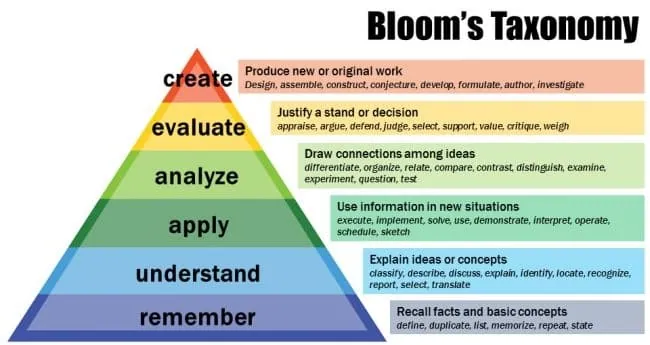
Bloom's Taxonomy is employed in classrooms of HG to help the teachers in understanding the objectives of classroom teaching. It guides them to change the complexity of the questions and helps students to achieve higher levels of understanding.
The curriculum is designed in such a way that the levels help to move students through the process of learning, from the most fundamental remembering and understanding to the more complex evaluating and creating.
Because Bloom's Taxonomy is based on a specific hierarchy of learning levels, each level is a vital part of learning to achieve deeper, more advanced cognitive skills and abilities. Building upon each level in lesson plans guides students to think in "increasingly more sophisticated ways".
The Taxonomy is used as a practical tool, providing a framework in which to plan challenging lessons that help to ensure students' progress is maximised – a fundamental tenet of successful teaching. The framework also allows educators to assess learning on an ongoing basis, encouraging students to reflect on their progress.
Developing 21st Century Skills
Critical Thinking
Critical thinking is generating questions, evaluating information and arguments, making connections, identifying patterns, reasoning to solve problems in the real world.
Communication
Communication is appropriately interacting with others to convey meaning and gain understanding for multiple purposes, settings, and audiences including the digital environment.
Citizenship
Citizenship is respectfully and positively impacting others and being actively involved in addressing community, national and/or global issues.
Creativity
Creativity is generating ideas and approaches to design innovations, construct solutions, build understanding, and express perspectives.
Growth mindset
Growth mindset is working through challenges showing tenacity, perseverance, resilience, self regulation and self-advocacy.
Collaboration
Collaboration is working interdependently, learning from and contributing to the learning of others for a shared purpose in a wide range of environments.
21st-century skills are more important to students now than ever before. By providing a framework for successful learning in the classroom, we ensure students can thrive in a world where change is constant and learning never stops.
These are tools that are tremendously important for our nation's well-being and can be universally applied to enhance ways of thinking, learning, working and living in the world. The skills include critical thinking/reasoning, creativity/creative thinking, problem solving, metacognition, collaboration, communication and global citizenship.
We equip teachers to use new teaching strategies or educational software, giving them hands-on demonstrations and offering concrete entry points to facilitate development of these skills in their classrooms. Personalized learning involves students in their own learning process, teaching them several valuable skills.
Project Based Learning Activities
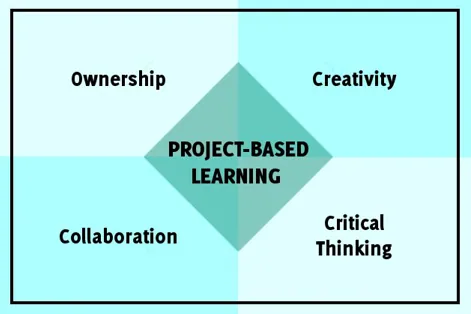
Project-based learning is adopted as a dynamic classroom approach in which students actively explore real-world problems and challenges and acquire a deeper knowledge. Project based learning activities allow our students to develop deep content knowledge. Importantly, they also support development of 21st century skills such as critical thinking, collaboration, creativity and communication. Relevant PBL activities are conducted under the guided supervision of aur able staff to develop greater depth of understanding the concepts than in traditional classroom-based learning resulting in improved levels of student's creativity.
Experiential Learning
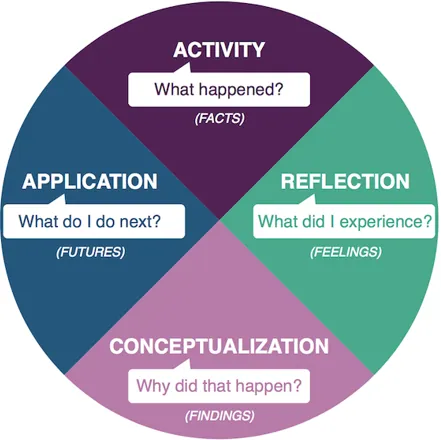
At HG, we believe in experiential learning methodology in order to make learning fun filled, interesting and meaningful. We encourage students to ask questions and explore answers to become critical thinkers of the future generation. By engaging students in hands-on experiences and reflection, they are better able to connect theories and knowledge learned in the classroom to real-world situations.
Multiple intelligences in the classroom
No two children think and learn the same way, so, it is necessary to present information in a completely different light to reach some students. The theory of multiple intelligences provides teachers of HGS with a framework and tools that allows them to better meet the needs of the different types of learners present in every classroom.
Music Smart
Musical Intelligence
Body Smart
Bodily-Kinesthetic Intelligence
People Smart
Interpersonal Intelligence
Word Smart
Linguistic Intelligence
Logic Smart
Logical-Mathematical Intelligence
Nature Smart
Naturalistic
Self Smart
Intrapersonal Intelligence
Picture Smart
Spatial Intelligence